Name: Peter Solc
Triathlon background
I didn't get into triathlon until 2021. Before Covid, I played ice hockey for about 6 years, until it was shut down due to the pandemic. Mentally, it was an absolute nightmare doing nothing. Then, in the summer of 2020, my workplace ran a 2-week cycling challenge. That challenge triggered something in me that I'd been missing since hockey ended. Given the unknown duration of Covid at the time, and the excitement I felt during the challenge, I decided to keep going.
On August 4th, 2020, while searching for different triathlon distances, I stumbled upon Enduroman. I was blown away by the sheer distance involved and the small number of athletes who had completed it. No athlete from my home country, Slovakia, has ever completed this challenge — and that became part of the pull. To keep that dream alive, I knew I first had to complete an Ironman, just to see if my body could sustain the training load.
I started training on my own in September 2020 and hired a coach in 2021. I went on to complete 3x70.3s and 5x Ironman races between 2021 and 2024, including the World Championship in Nice — with my final race, Ironman Austria, in June 2024. After that, I shifted my focus entirely to training, with 100% preparation aimed at Arch to Arc.
How old are you?
49
What do you think will be the toughest moment during the event?
Definitely the swim. Swimming the Channel by itself is a huge undertaking, let alone after running from London to Dover.
Favourite discipline (run, cycle, swim) and why?
I like them all pretty much equally, since they're all very different — and that's what I find most interesting about this sport. Having 3 disciplines means it never gets boring; there's always something different to focus on and improve. That said, if I had to pick, it would be swimming.
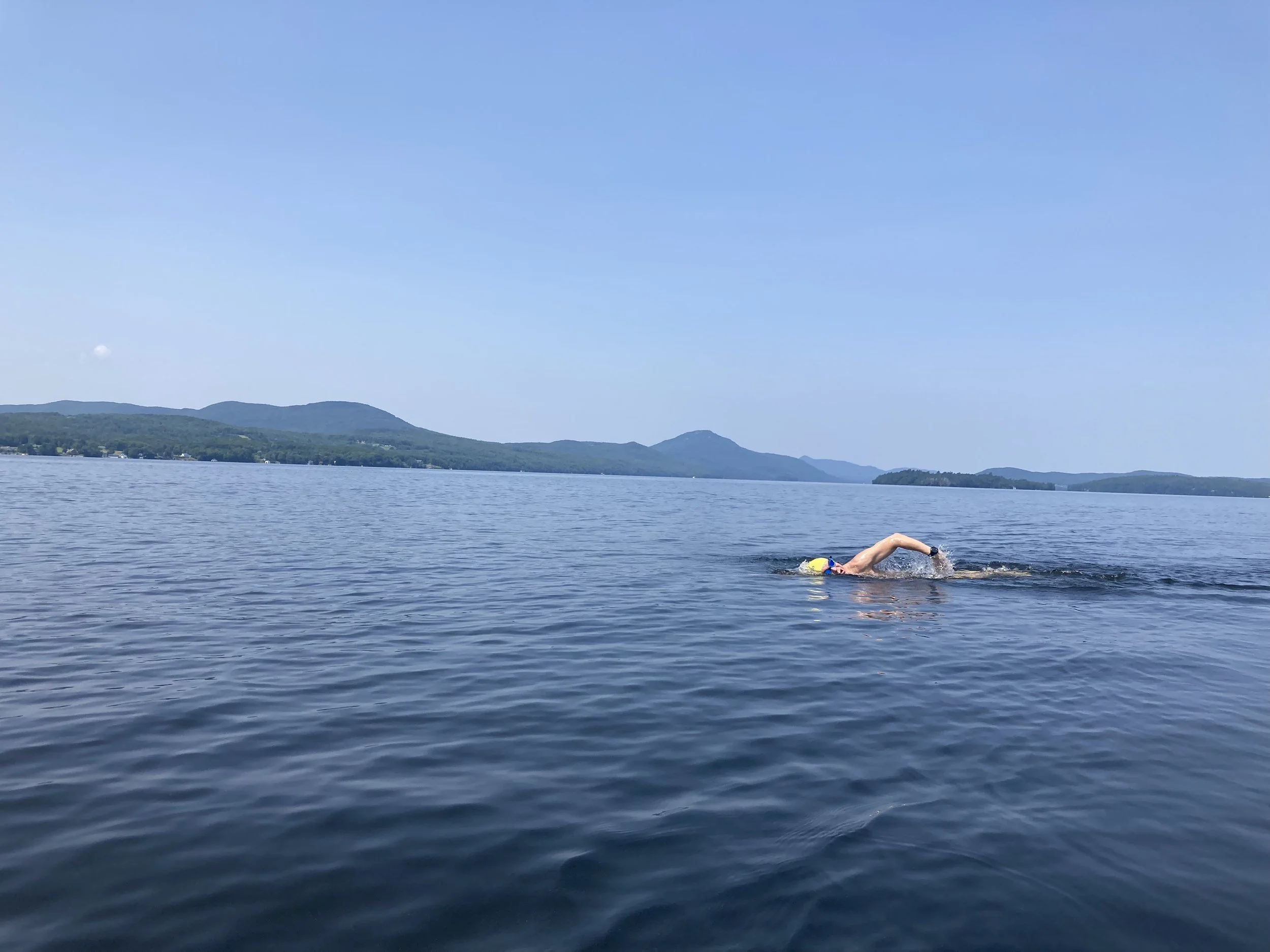
I especially enjoy long swims in open water with a support boat or kayak, so I can go far and feel truly free — especially in an environment I don't often visit, or have never been to before. That kind of exploration is only possible with support. I can go on autopilot and let my mind wander. The sound of water, whether outside or in the pool, feels like therapy, though outdoors is definitely preferable.
Long runs come a close second for that same reason — plenty of time to just switch off and drift into that same headspace.
Why do you push yourself to this level?
It's been one hell of a journey — a life-changing experience where I've learned so much about myself, both physically and mentally. Exploring what I'm capable of along the way, and then pushing myself beyond that into uncharted territory, has been an amazing ride. That constant discovery — of what's actually possible — is what keeps me pushing.
What made you want to take on Arch2Arc?
It was simply the enormity of the challenge — I couldn't let it go from the moment I stumbled upon it. I consider myself very fortunate to have come across it, because it felt as if it had been set in the back of my mind from that very moment. I don't know why, and I've never questioned it. It just feels like it was meant for me.
Favourite post-training meal
A huge pile of pasta — usually an entire box, serving 4-6 — topped with a pile of chicken fajitas, alongside a baby spinach salad with blueberries and walnuts, and gallons of iced tea. I alternate the chicken with sockeye wild salmon at least 3 times a week — absolutely delicious.
How can people follow or support your journey?
You can follow along live during the attempt at enduroman.com/live-tracking, or follow my training journey on Strava at strava.com/athletes/petersolc.
Least favourite discipline?
Since I have to pick, I'd go with cycling. I can't fully switch off outside, since it requires so much attention — riding on the road means you always have to stay aware of your surroundings, which takes away that sense of freedom. I can't simply drift off.
Since last year, I've fully switched to indoor cycling due to an injury I sustained, so I'm trying to stay safe. While that removes the need to pay attention to my surroundings, it brings a different challenge — long 6+ hour sessions indoors can be mind-numbing in their own way.
What does finishing Arch2Arc mean to you personally?
Absolutely EVERYTHING, period. It's been the singular focus of my life for years, and there's nothing I want more.
Hidden talent outside of sport
...still hidden, I guess.
What do you do for work?
Software Engineer in the trading industry
What does a typical training week look like?
On average, around 20 hours a week across all 3 disciplines. Typically, that's 2 one-hour sessions during the week for both run and bike, plus longer weekend sessions. Swimming is usually twice during the week for an hour each, then back-to-back-to-back sessions Friday through Sunday, ranging anywhere from 1 to 3 hours nonstop.
Roughly every 4 to 6 weeks, I have a mini camp — like Lanzarote — where the load increases to 25-30 hours, concentrated heavily on the weekend.
Nationality / where you’re based
Slovak/American - Chicago, USA
One word your friends would use to describe you
Crazy
Who or what inspires you?
Being the one to finally get it done for Slovakia — that's what drives me.
What keeps you going when things get really tough?
Simply the fact that so few have completed this challenge. The idea of being one of them one day keeps me going.
How are you preparing differently for this compared to other races?
Very different compared to regular Ironman training. Even before fully committing to Arch to Arc, I built relevant experience with 3x50-mile ultramarathons in 2022 and 2023 to prepare for the demands ahead. After completing the World Championship in Nice in 2023, I attended my first Lanzarote training camp in January 2024 — after which I decided to stop racing altogether, with one exception: my final Ironman race in Austria in June 2024.
That September, I also swam an English Channel 4-person relay to gain real experience in Channel conditions. After that, I shifted my focus entirely to training, with 100% preparation aimed at Arch to Arc.
Since the swim comes after the run rather than as the first discipline, most of my swim sessions are scheduled last in the day — after a run or bike, especially on weekends when those sessions are long. This means swimming comes in when my body is already tired and has to deal with fatigue, replicating race-day conditions as closely as possible.
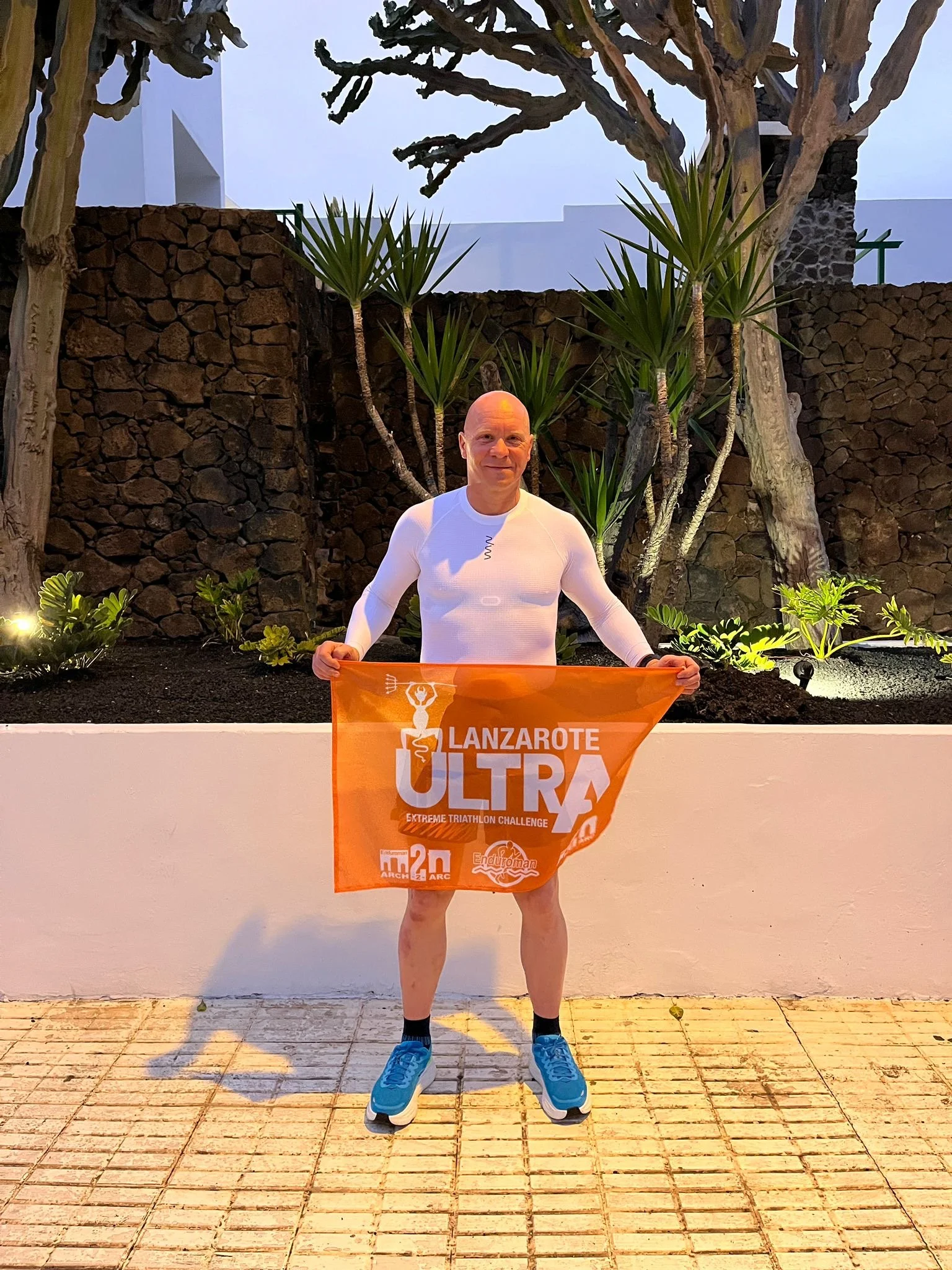
The absolute game-changer was coming to the Lanzarote swim camp — I've now attended three years running (January 2024, 2025, and 2026), training in conditions very similar to Arch to Arc and testing my limits each time. During the January 2026 camp, I also completed the Lanzarote Ultra Challenge. I use feedback from the Enduroman coaching staff and integrate those concepts with my coach into my training for the rest of the year, then return the following January to assess progress and fine-tune further.
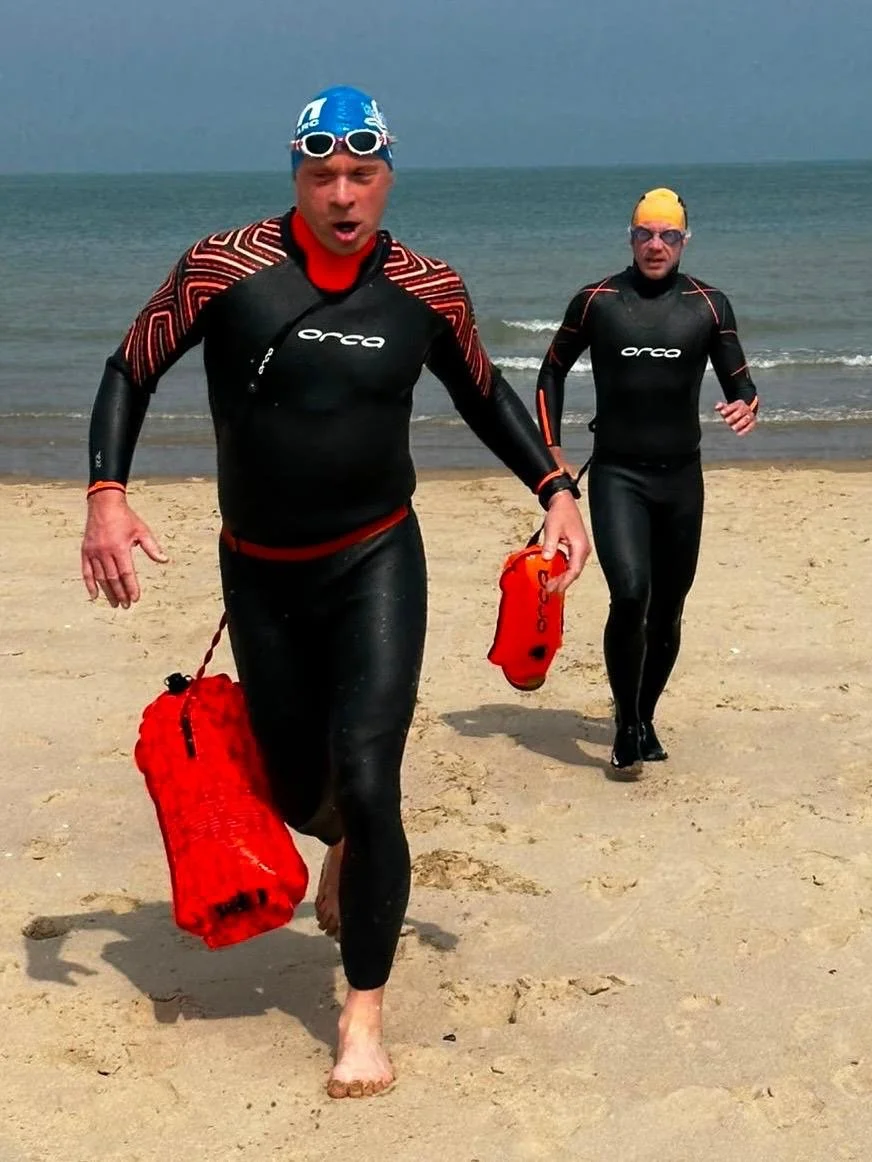
At the camp, I've met many great like-minded athletes from different countries, all working toward similar goals. It's also where I met a close friend, Giulio Dubbiosso — together we decided to take our training further, swimming half the Channel distance along the French coast, and a two-way crossing of Lake Windermere in England — a distance matching the Channel crossing itself — to gain real experience at that exact distance.
Have you ever wanted to quit during training? What got you through it?
Of course, many times. If I didn't, I wouldn't believe I was pushing myself hard or far enough — and this challenge is exactly about that: pushing the limits. The only skill I really have is the ability to grind, that's all. Many of my training sessions have been exactly that — grinding through long hours, often fighting fatigue along the way.
So what gets me through? Sometimes it's picturing what comes after the session — a shower, a good meal — because I already know how good I'll feel once I finish. Other times, I just need to curse everyone and everything in my head to get through it. During tough sessions with fatigue, it's always a rollercoaster, so I remind myself it's temporary. Tricking my mind by counting backwards in the pool, or focusing on just the next 10 minutes during a long run, helps me push through the rough patches.
That said, there have been times — after a vacation, for example — when getting back to high volume in the first week is genuinely difficult. In those cases, I'll adjust the pace or distance just to ease back into it.
Any unusual or extreme training methods?
Definitely. Fatigue is the name of the game here, since this challenge will bring fatigue to the highest level. Borrowing a training concept from the Lanzarote camp, every so often — usually every 4-6 weeks — I go through a similar setup: an overloaded weekend with minimal sleep and back-to-back long training sessions piled on top of each other, usually starting Friday evening and running through Sunday.
During those sessions, fatigue comes and goes, and fighting through it is an amazing experience. While it's painful in a sense, it's also incredibly beneficial for learning how the body — and especially the mind — deals with it. Some of the most painful sessions are exactly what's needed, and they bring the greatest benefits.